Step 01
User initiates
An authorized user initiates a proposed treatment cycle through a portable electronic device.
Technology
Proposed 222-nm Far-UVC integration concepts for potential controlled, on-demand surface-treatment applications involving smartphones and other portable electronic devices.
The patent
An electronic device with UVC sanitizing lights, operated through the device's own controls and display.
1 claim · 3 drawing sheets · provisional application filed June 12, 2020
The science
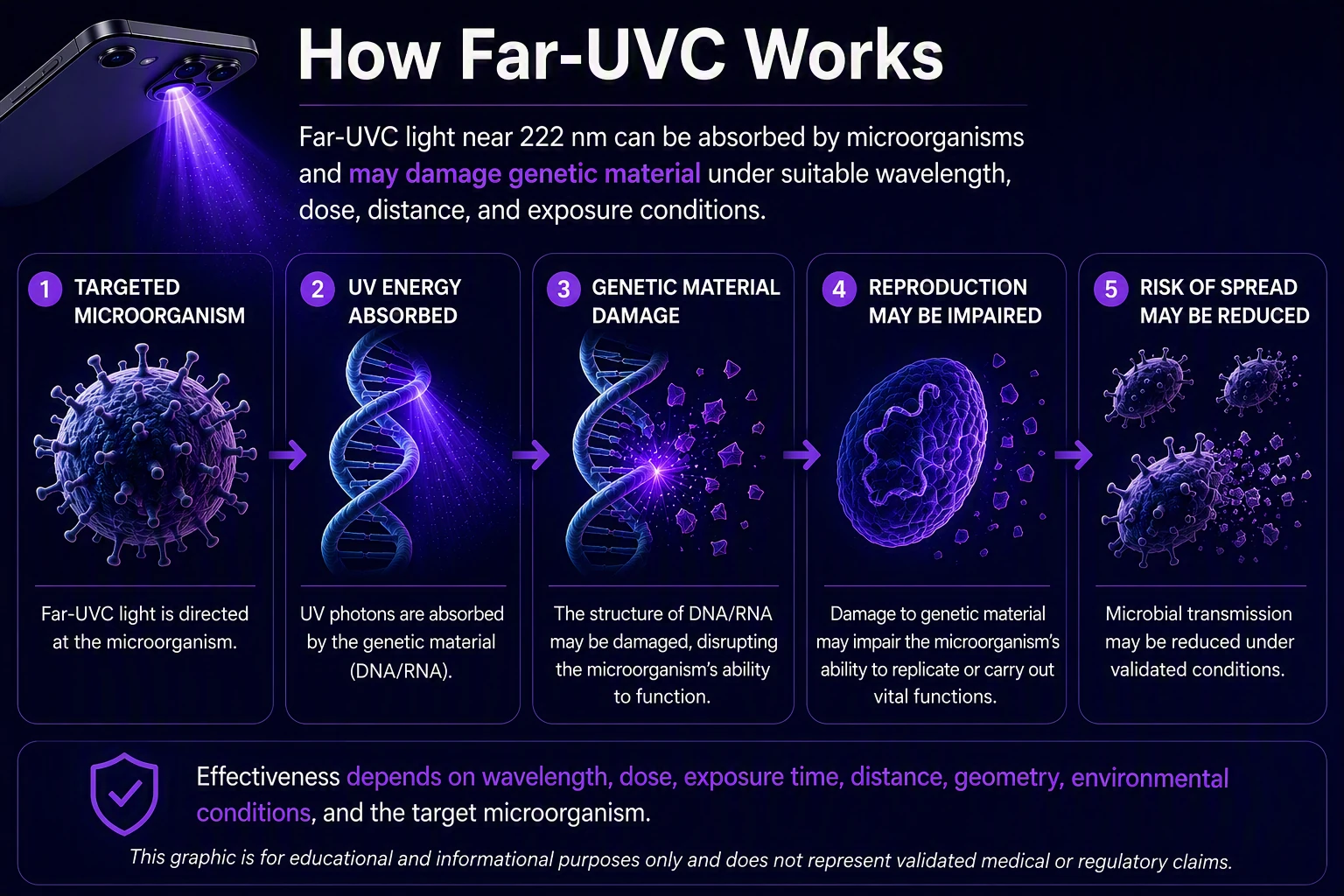
Far-UVC light near 222 nm can be absorbed by microorganisms and may damage genetic material under suitable wavelength, dose, distance and exposure conditions.
The system
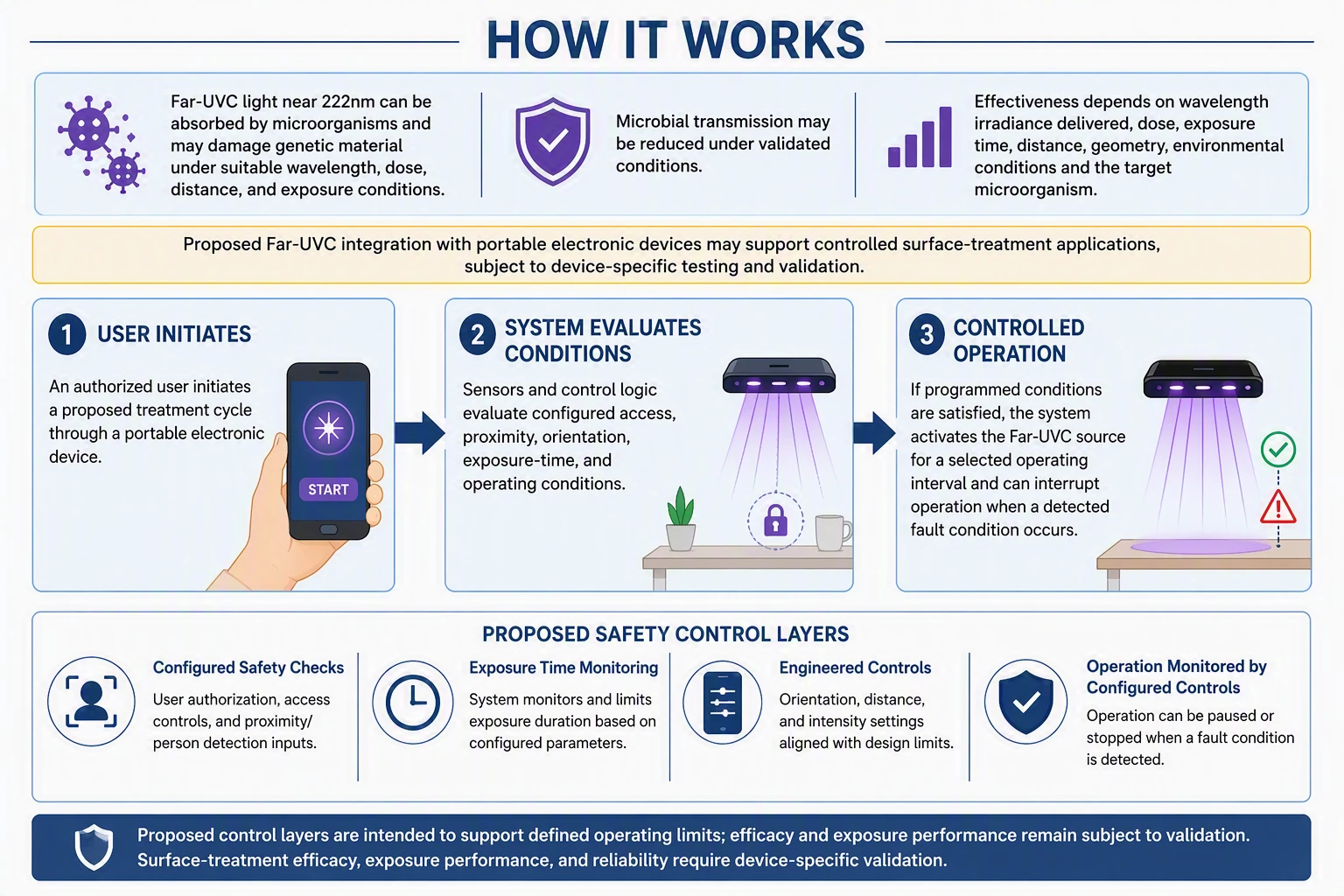
Step 01
An authorized user initiates a proposed treatment cycle through a portable electronic device.
Step 02
Sensors and control logic evaluate configured access, proximity, orientation, exposure time and operating conditions.
Step 03
If programmed conditions are satisfied, the system activates the Far-UVC source for a selected interval and can interrupt operation on a detected fault.
Potential applications
Concept visualizations of controlled surface treatment for payment terminals, remotes, keyboards, door handles, elevator buttons, earbuds and wearables.
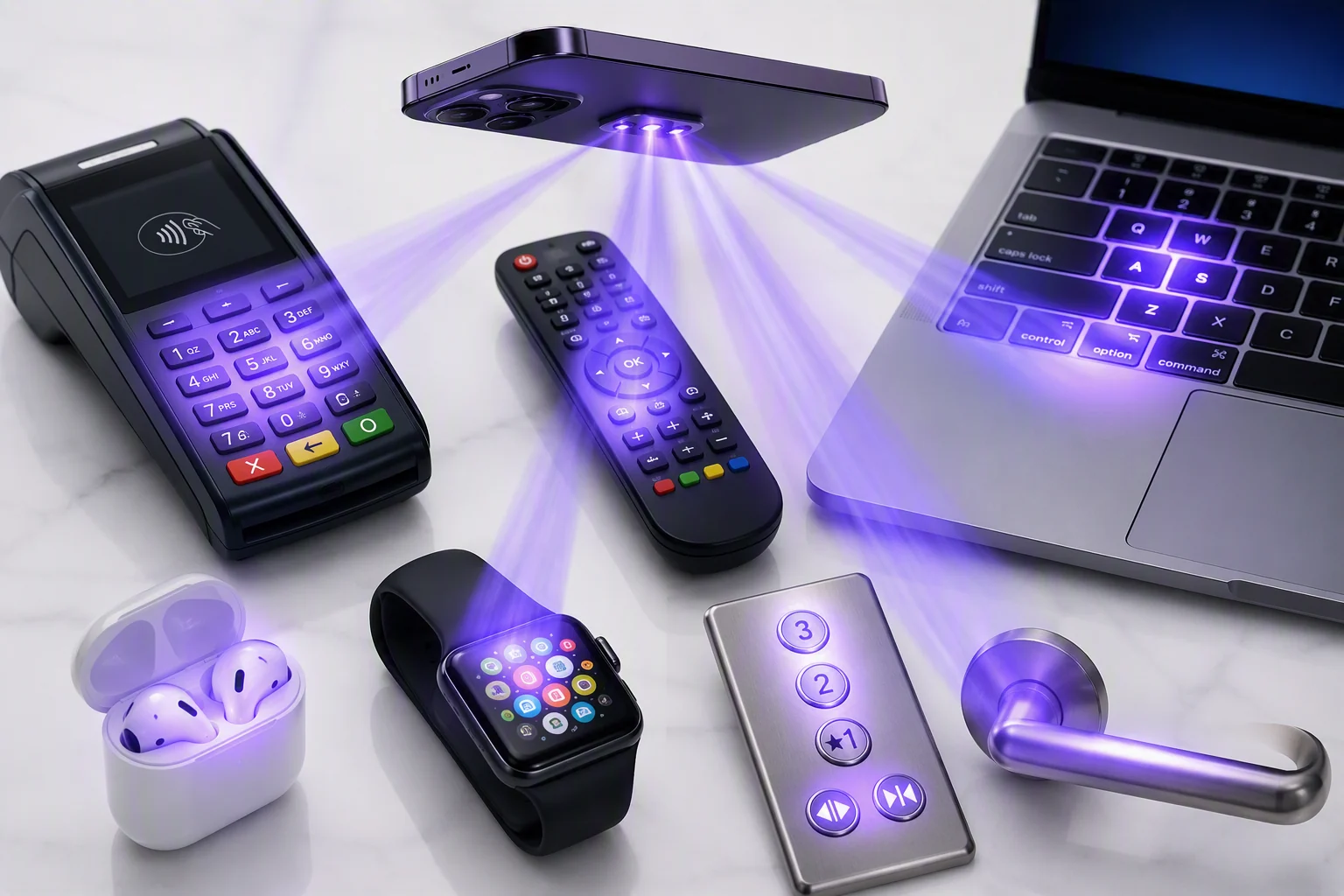
AI-generated concept demonstrations illustrating potential future applications of patented Far-UVC integration technology.
Proposed safety control layers
User authorization, access controls, and proximity or person-detection inputs.
The system monitors and limits exposure duration based on configured parameters.
Orientation, distance and intensity settings aligned with design limits.
Operation can be paused or stopped when a fault condition is detected.
Status: any performance, disinfection-efficacy and exposure-safety claims remain subject to device-specific engineering, laboratory testing, regulatory review and validation.
Request a technical review, or sign the MNDA for the full technical package.